

.png)

Search is changing. Not long ago, getting found online mainly meant climbing Google’s rankings through traditional SEO (Search Engine Optimization). Now, with the rise of AI-driven search results, you might be hearing new acronyms like AEO and GEO. AEO (Answer Engine Optimization) and GEO (Generative Engine Optimization) represent the next evolution in how businesses can boost their online visibility. But what do these terms really mean, and how are they different?
In this beginner-friendly guide, we’ll break down GEO vs AEO in clear terms. You’ll learn what each approach involves, why both matter for your business, and how to optimize your website for this new AI-powered search era. By the end, you’ll see that whether someone is asking a voice assistant for an answer or getting an AI-generated summary, your content can be the answer they find.
Introduction: Search Beyond SEO
If you’re familiar with SEO (Search Engine Optimization), you know it’s about making your website rank higher on search engines like Google. SEO involves tactics like using the right keywords, earning backlinks, and ensuring a good user experience. But search behavior is evolving. Today, people often get answers directly from search results or digital assistants without ever clicking a website. Think about the last time you asked Siri or Alexa a question, or when Google just showed you a paragraph with the answer (a featured snippet) at the top of the results.
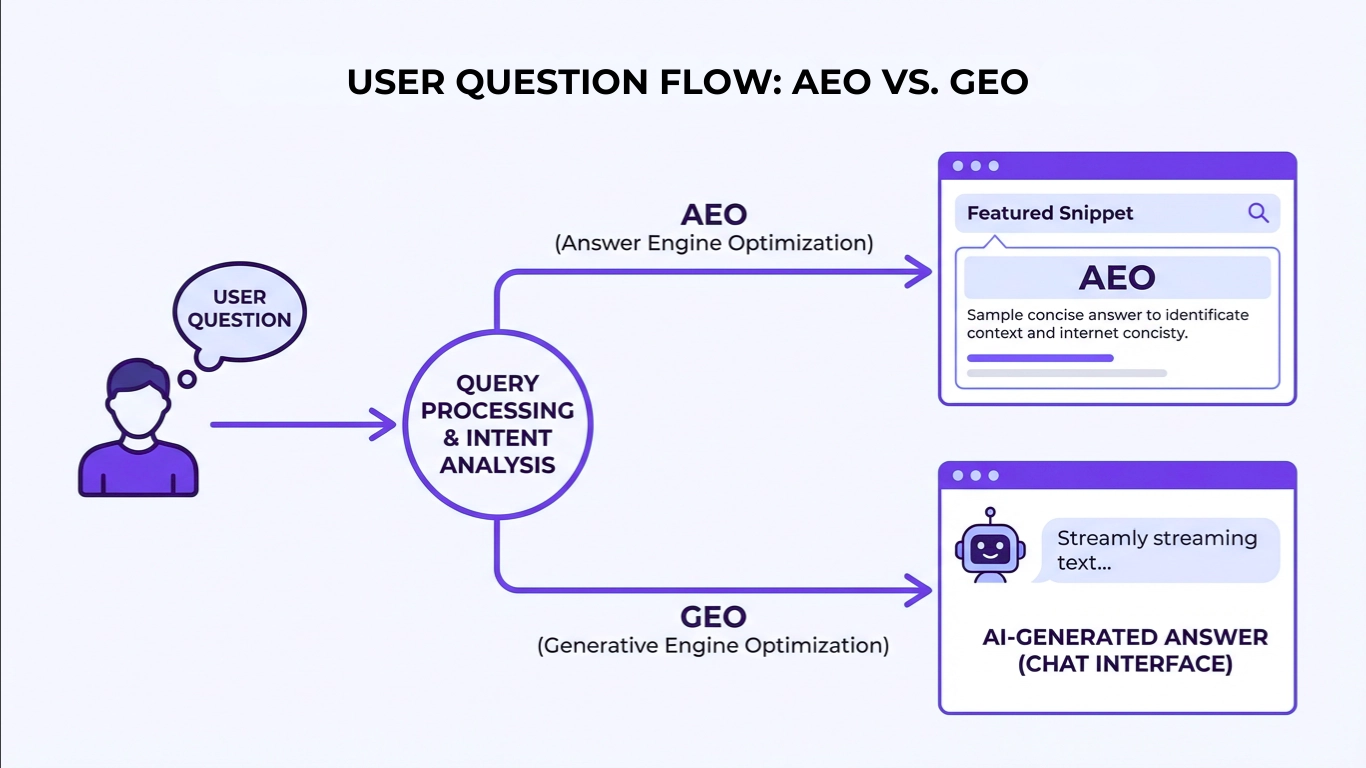
Now, with the advent of advanced AI like ChatGPT and Google’s Search Generative Experience (SGE), search engines don’t just list links – they generate answers by pulling information from various sources. This is where Answer Engine Optimization (AEO) and Generative Engine Optimization (GEO) come in. These strategies go beyond traditional SEO to help your content become the answer AI platforms provide.
In a nutshell:
- AEO is about answering questions directly on search engines (so that your content can appear as a quick, no-click answer like a snippet or voice reply).
- GEO is about optimizing for AI-generated responses, ensuring your content is included when AI tools like chatbots or AI search results compile an answer.
Both AEO and GEO aim to get your information in front of users in this new landscape. Let’s explore each one in more detail.
What is AEO (Answer Engine Optimization)?
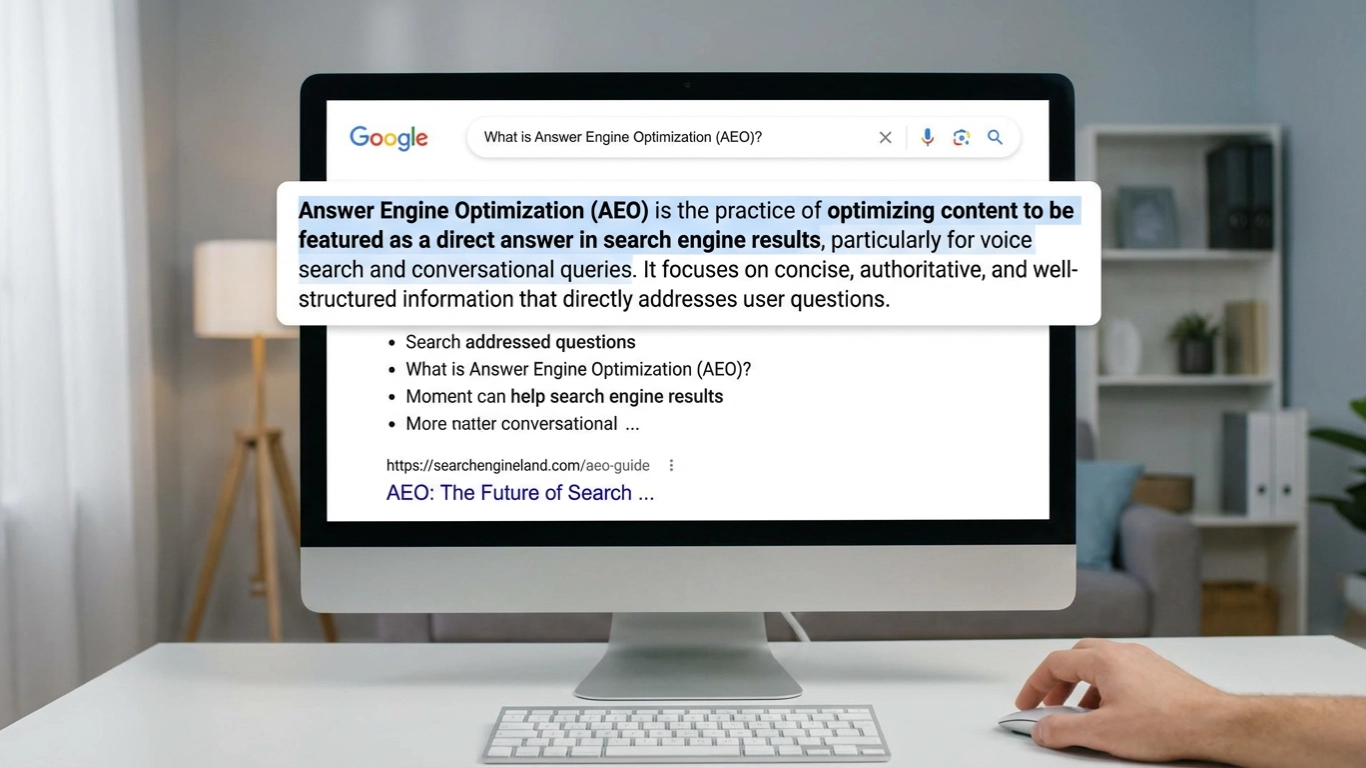
Answer Engine Optimization (AEO) means tailoring your content so that search engines can use it to give direct answers to users. In the early days of AEO, this mostly referred to winning featured snippets on Google, showing up in Knowledge Panels, or appearing in other rich results that provide an answer right on the results page. The classic example is when you Google a question, say, “How do I speed up my website?”, and Google displays a highlighted excerpt from a site that answers the question. That highlighted result is what AEO is all about.
Instead of just aiming for the #1 blue link, AEO focuses on position zero (the answer box at the top). It’s built on the idea that users want quick, concise answers without always clicking through to a full webpage. This also extends to voice search: if someone says “Hey Google, what’s the best time to post on Instagram?”, you want your content to be the one the voice assistant reads out.
Key features of AEO:
- Directly answers common questions: Your content should immediately address frequently asked questions in your field. If you have a page on your site, for example, that clearly answers “What is the difference between X and Y?”, that’s AEO in action.
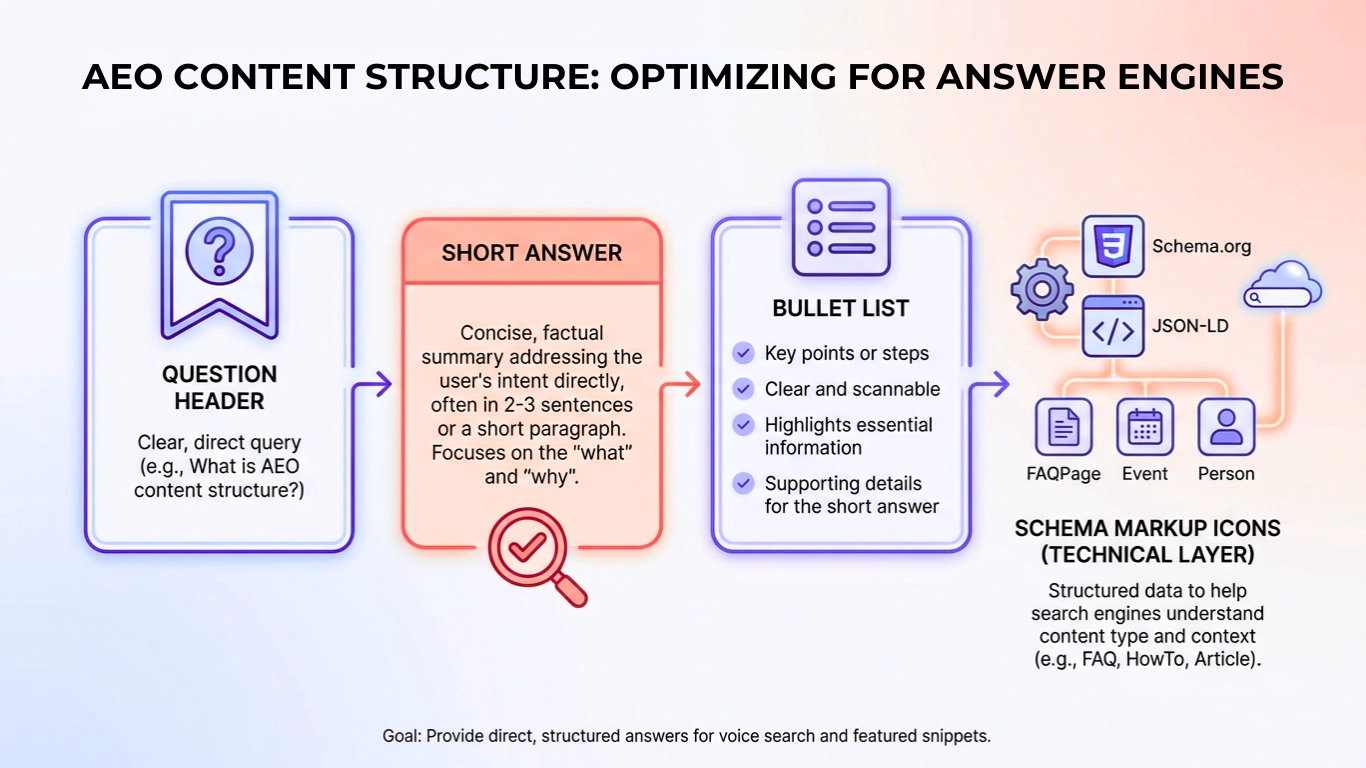
- Clear, scannable format: Content optimized for AEO is usually formatted in a way that’s easy for both users and algorithms to scan. This means using headings, bullet points, or step-by-step lists. For instance, an article titled “5 Tips to Speed Up Your Website” with a bulleted list of tips is more likely to get picked up as a featured snippet because it’s neatly structured.
- Concise and factual: AEO content tends to be brief and to the point. Think of definitions, quick how-tos, or single-paragraph answers. You’re aiming to become the go-to answer source. If you have longer content, you might include a short summary or an FAQ section that an answer engine can grab easily.
In essence, AEO is about making your site the trusted source of answers. When done right, AEO can position your business as an authority. For example, a local bakery’s blog post answering “How to choose a wedding cake flavor” might land in a snippet, immediately showcasing their expertise to potential customers.
What is GEO (Generative Engine Optimization)?
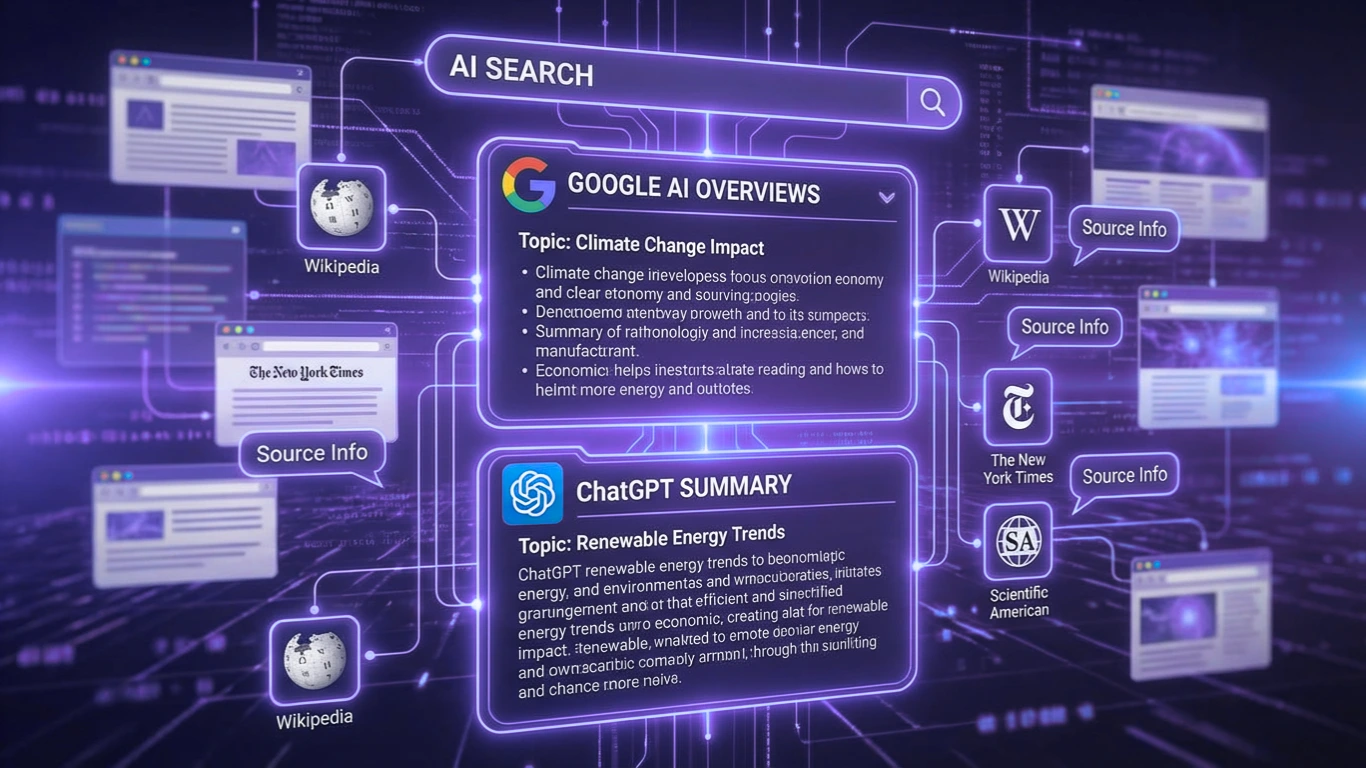
Generative Engine Optimization (GEO) is a newer concept that has emerged with the rise of AI-driven search tools. While AEO still largely centers on traditional search engines (like Google’s regular results), GEO is about optimizing your content for AI-powered answers and summaries. Think of the answers you get from ChatGPT, Gemini, Perplexity, or other AI assistants. Those responses are generated by AI algorithms that pull from various sources. GEO is the strategy of making sure your content is one of those sources.
In simpler terms, GEO asks: If an AI assistant is answering a question related to your business or expertise, how do you make sure it “knows” about your content and includes it?
A few important points about GEO:
- Content for AI summaries: GEO focuses on ensuring your content can be easily processed and used by AI models to formulate answers. For instance, Google’s SGE might compile a few sentences from different websites to answer a complex query. With GEO, you’re optimizing so that your site’s content is selected as part of that AI-generated answer. This might mean writing content that’s comprehensive and well-structured (so AI finds it relevant) and using schema or metadata that help AI identify what your content is about.
- Multi-platform visibility: Unlike AEO which was mainly about Google, GEO considers a wide range of AI platforms. Your content could be surfacing in a voice assistant’s reply, a chat bot’s answer, or an AI summary on a search results page. GEO is about having a presence wherever those generative answers appear – be it Google’s AI Overview, Copilot, ChatGPT, or even emerging platforms like Perplexity or Claude. It’s a broader playing field.
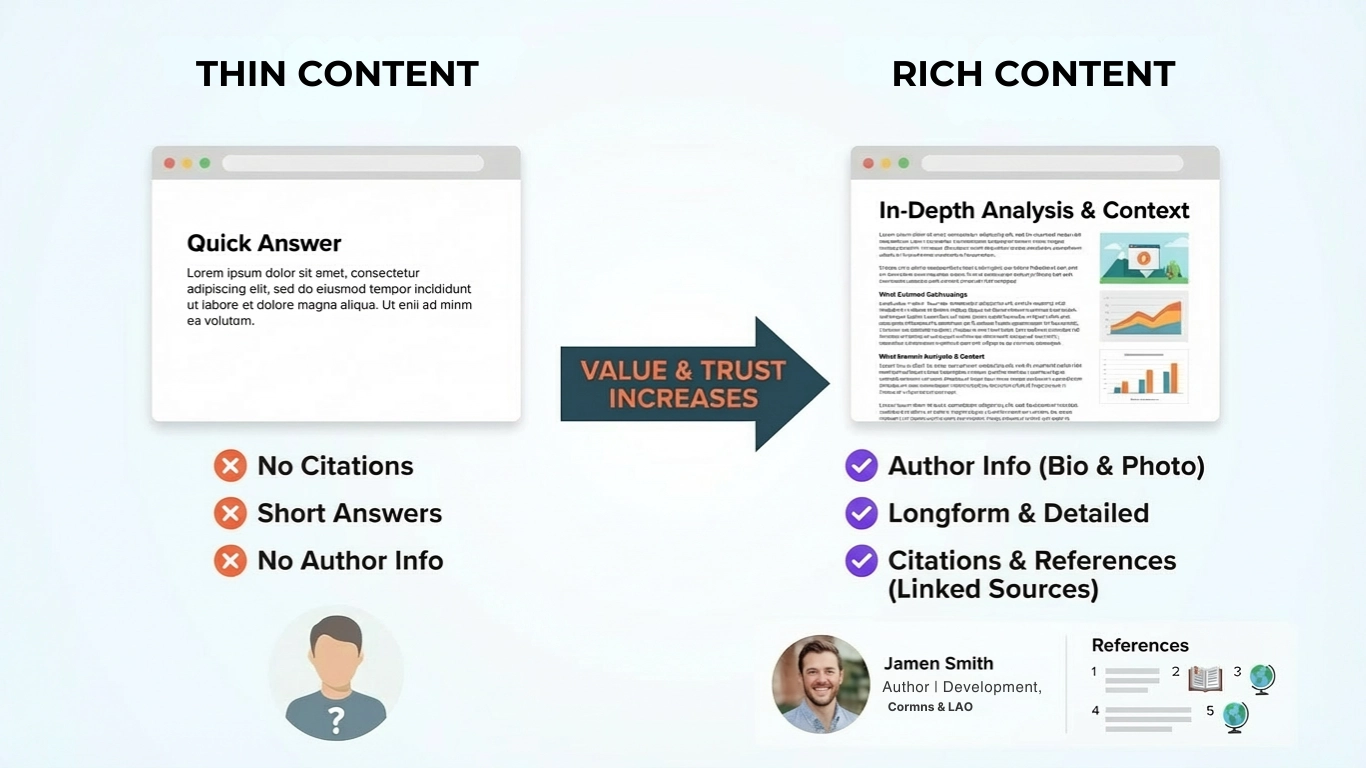
- Brand as a trusted source: A big part of GEO is ensuring the AI recognizes your brand or website as authoritative. AI models are trained on vast data; GEO involves techniques to “train” or inform these AI that your content is reliable and up-to-date. Practically, this can include creating content that is highly informative, consistent, and signals expertise. Over time, if an AI frequently sees your website providing quality info on a topic, it may be more inclined to pull from it. Some of this also involves behind-the-scenes steps like using structured data (schema markup) to clearly label important details (like your business name, what the content is about, who the author is) so AI can identify facts correctly.
One important thing to note: GEO doesn’t always lead to a direct click to your website. Sometimes an AI answer will use your content but not explicitly link back (or the user might not click if their question is answered). For example, if someone asks an AI, “What are the benefits of green tea?” the AI might generate a few paragraphs compiling info from several articles, including yours, but the user just reads the answer without visiting those sites. In that scenario, your brand might get mentioned or your info is used, but you don’t see a website hit. GEO is thus about brand visibility and authority in the AI ecosystem, not just direct traffic. It ensures that when AI platforms answer questions, your business’s knowledge and answers are part of the conversation.
GEO vs AEO: Key Differences
Now that we’ve defined AEO and GEO, you might be wondering how exactly they differ. They do overlap in the sense that both aim to surface your content as answers, but there are some distinctions in focus and technique. Here’s a straightforward comparison:
- Type of Answer: AEO is typically about short, direct answers to specific questions. For example, a one-sentence answer or a quick list (think of those bite-sized responses in a snippet or voice answer). GEO, on the other hand, involves detailed, synthesized answers. An AI might draw on a whole paragraph or multiple sources (including your content) to produce a comprehensive reply to a more complex question. In short: AEO = be the quick answer; GEO = be part of the detailed explanation.
- Primary Platforms: AEO mostly plays out on search engines like Google (and Bing to some extent) in their traditional modes. It includes things like Google’s featured snippets, knowledge panels, or the answers voice assistants read from search results. GEO covers the new AI-driven platforms – for example, Google’s Search Generative Experience (SGE), Bing’s Copilot, ChatGPT’s browsing mode, and others. Essentially, AEO = classic search answers; GEO = AI chat and summary answers.
- User Interaction and Clicks: With AEO, when your answer appears as a snippet, usually the goal is still to entice the user to click your link for more info. It’s an answer, but also a teaser to get traffic. With GEO, the AI’s answer might fully satisfy the user. They might not click through to any site because the AI compiled everything. So the value in GEO is more about branding and presence. For instance, if an AI answer says, “According to Acme Corp’s blog, the top benefit of green tea is X”, your brand gets exposure even if no click occurs. AEO is often about driving the click from an answer box, whereas GEO is about being included or cited in an answer that might not require a click.
- Content Optimization Tactics: AEO tactics include things like adding FAQ sections or How-To schemas to your pages, using question-style headings (“What is…?”), and keeping answers concise and well-formatted (bullets, tables). GEO tactics involve ensuring AI-readability and credibility: for example, focusing on entity optimization (making sure your brand or product names are consistent and marked up with schema), writing in a clear style that AI can easily interpret, and providing context and depth so AI has plenty to work with. We’ll dive more into these tactics in the optimization section.
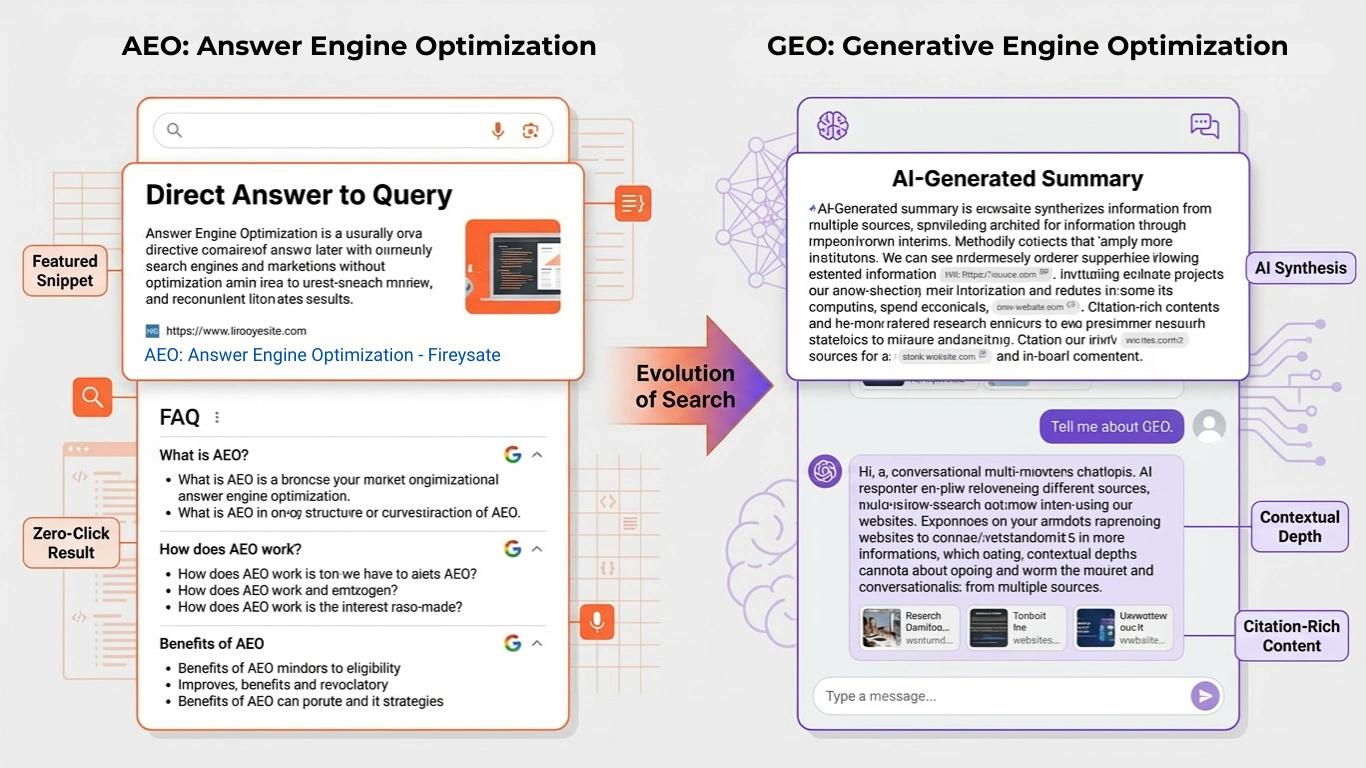
It’s also worth noting that AEO is a bit older as a concept (it emerged when Google started showing direct answers a few years ago), while GEO is a response to very recent changes (the AI search boom around 2023-2024). AEO was coined in the pre-ChatGPT era and is rooted in SEO, whereas GEO explicitly came about due to generative AI in search.
Despite these differences, remember that AEO and GEO share the same ultimate goal: getting your content in front of people who need answers. Both rely on quality, relevant content at their core. In fact, many optimizations you do will help with both. Let’s discuss why embracing both strategies is important for your business.
Why Your Business Needs Both AEO and GEO
You might think, “Isn’t one of these enough? Should I focus on one over the other?” In reality, AEO and GEO complement each other, and a modern content strategy should account for both traditional answer boxes and AI-driven answers. Here’s why you need to care about both:
- Different Search Experiences Coexist: People still use traditional search engines heavily, and more users are now trying voice search or AI chatbots for answers. For example, a customer might Google something one day (where a featured snippet could show your content), and the next day ask a similar question to an AI assistant (where an AI overview might draw on your content). To maximize visibility, you want to cover both bases – being the snippet and being in the AI summary. One doesn’t replace the other; they run in parallel.
- AI Answers Are On The Rise: The influence of AI in search is growing fast. Google’s new AI-powered results and other AI search tools are not a far-off concept – they’re here now. In fact, recent industry analysis found that nearly half of searches (up to 47%) now show an AI-generated overview at the top of the results. That’s huge. It means if you ignore GEO, you could be invisible in almost half of the search interactions where the AI is giving the answer first. Early adopters of GEO strategies have a chance to get ahead of competitors in this new space.
- Trust and Authority Carry Over: By working on AEO and GEO, you’re essentially making your content more trustworthy and user-friendly, which benefits all channels. If you structure your content well and cite facts (good for AI), it will also likely improve your regular SEO (because the content is high quality and authoritative). Likewise, winning a featured snippet (AEO) can boost your brand credibility, which might make an AI more likely to consider your site as a source. Both strategies encourage you to focus on clear, authoritative answers, which strengthens your overall digital presence. In short, if a search engine or an AI assistant consistently sees your business providing great answers, you become a go-to authority across the board.
Finally, think of AEO and GEO as an evolution of SEO, not a replacement. As one industry expert put it, GEO and AEO aren’t replacing SEO, they’re expanding on it. Your foundation should still be great SEO (technical soundness of your site, good content, fast loading, etc.). On top of that, AEO and GEO are like new layers: one to capture quick-answer opportunities, another to integrate with AI’s way of delivering answers. Businesses that invest in both will be positioning themselves to be discovered by customers no matter how the question is asked or answered.
How to Optimize for AEO and GEO
So, how can you put these concepts into action? The good news is that many steps you take will improve both your AEO and GEO performance. Here are practical ways to optimize your website and content so that it shines in both traditional answer engines and AI generative engines:
1. Cover the Questions Your Customers Ask
The first step is understanding what questions your target audience is asking, and making sure you have good answers published for those questions. This is fundamental to AEO and carries into GEO as well.
Start by researching common questions in your industry or about your products. If you’re a home insurance company, for example, people might be asking “What does home insurance not cover?” or “How do I lower my home insurance premiums?”. Tools like AnswerThePublic, AlsoAsked, or even just Google’s “People Also Ask” suggestions can give you insight into popular questions. Make a list of these queries.
Then, create content that directly answers each of those questions. This could be in the form of blog posts, an FAQ page, how-to guides, or Q&A sections on your site. Each piece of content should focus on a specific question (or cluster of related questions) and provide a clear, accurate answer.
For AEO purposes, focusing on one question per article or section often works best (so the answer is very targeted). For GEO, you can also have comprehensive guides that cover lots of related questions – just ensure each section within that guide answers a sub-question clearly (so that an AI might pull just that section to answer something).
Tip: Use your content management system to add a “FAQ” section on key pages. For example, if you have a services page for “Plumbing Repair”, include a few FAQs like “How quickly can you fix a leak?” or “Do you offer emergency services at night?” with concise answers. These are not only helpful to users but also prime content for answer engines to grab.
Remember, think like a customer. If you were completely new to your business, what would you ask? Cover those questions and you’re well on your way to satisfying AEO requirements and feeding useful info to AI systems (GEO).
2. Structure Content for Snippets and AI
How you format and structure your content can make a big difference in both AEO and GEO success. Search engines and AI algorithms love content that’s organized and easy to parse.
For AEO, having a clear structure can be the difference between your content becoming a featured snippet or being skipped over. For GEO, structured content helps AI break down and understand your information in order to include it in a generated answer. Here’s what to do:
- Use Descriptive Headings (H2s, H3s): Break your content into sections with headings that explicitly state the subtopic or question. For instance, in a blog post about email marketing, a section heading might be “How do I increase my email open rates?”, a question that might exactly match what someone asks an AI or types in Google. Headings framed as questions or clear descriptors help search engines know what that section is about.
- Bullet Points and Numbered Lists: When explaining a step-by-step process or listing benefits, use list formatting. AEO often pulls bullet or numbered lists as featured snippets (e.g., “5 Steps to Improve Your Credit Score” could show up as a list snippet). For GEO, lists are also useful because they segment information cleanly, and an AI might include the list points in its answer.
- Tables and Charts: If applicable, use tables for structured data (for example, a comparison table of product features or pricing). Google sometimes shows tables in snippets, and AI can read them to extract specific facts or figures. Just ensure your tables are simple and labeled clearly.
- FAQ Schema Markup: This is a bit technical, but extremely useful. If you have a Q&A on your page, adding FAQ schema (a type of structured data code) can signal to Google that your page contains official questions and answers. This can lead to your questions being displayed directly on Google’s results under your link, and it also feeds answer engines. For GEO, any structured data (FAQ, HowTo, Organization schema, etc.) helps AI better identify the content and context of your site. If you’re not techy, you might need a developer or an SEO plugin to help with adding schema, but it’s worth it.
- Keep Answers Near the Top: Don’t bury the lede. It’s often helpful to pose a question in a heading and answer it immediately in the next sentence or two (then expand with details after). That way, the most snippet-worthy answer is right there. For instance: “What is an Answer Engine? An answer engine is any system (like a search engine or AI assistant) that provides direct answers to user questions, rather than just links.” Then you can go on with more info. The immediate answer could be the part that gets pulled as a snippet or into an AI response.
By structuring your content thoughtfully, you make it easier for Google or an AI to find the exact piece of info it needs. Think of it like giving them a well-organized toolbox – if they can quickly grab the right answer from your site, they will.
3. Make Your Brand an “Entity” AI Trusts
An entity in search terms usually means a recognizable person, place, or thing (including organizations and brands) that search engines understand as a distinct thing with an identity. In our context, your business or brand is an entity. Optimizing for entities means making sure your brand and key offerings are well-defined online so that search engines and AI know who you are and what you’re about.
Why does this matter? Because both Google and AI models like to provide answers from sources that they recognize and deem credible. If your brand is clearly identified and talked about in the context of your niche, AI is more likely to include your contributions when generating answers about that topic.
Here are ways to strengthen your entity presence:
- Consistent Name and Info: Use the same business name and descriptors everywhere (website, social media, Google Business Profile, etc.). Consistency helps the algorithms connect the dots that all these mentions refer to the same entity (you!). For example, don’t call yourself “Acme Plumbing” in one place and “Acme Plumbing Services LLC” in another – pick one and stick to it.
- Structured Data (Organization and Person schema): Just as FAQ schema helps with questions, Organization schema can define your company details (name, logo, founders, contact info) in a way machines understand. If you have key people (like an author or CEO whose expertise lends credibility), Person schema for those individuals can also help. By marking up your site with this info, you’re basically handing Google and AI a card that says “This is who we are and what we do”.
- Get Mentioned and Linked (Entity Association): Work on some digital PR – for instance, getting your business listed in trusted directories, mentioned in news articles or industry blogs, or contributing guest articles. When reputable sites mention your brand name alongside topics you specialize in, it reinforces to AI that you’re an authority on those topics. Even unlinked brand mentions (your name appearing without a hyperlink) can count as signals. The more the AI sees “Acme Plumbing – water heater experts” across the web, the more it knows your entity is related to “water heater expertise.”
- Build Out Author Profiles: If you have blog content, create author pages or bio sections that highlight credentials. For example, “Jane Doe, Licensed Nutritionist with 10 years of experience” as the author of a health article. Google’s algorithms (and likely AI) pay attention to who the content comes from. An expert voice attached to the content makes it more trustworthy. It’s part of what Google calls E-E-A-T (Experience, Expertise, Authoritativeness, Trustworthiness) in SEO. For AI, having a known expert entity behind content can make it more likely to surface.
By optimizing your brand as an entity, you’re not only helping AEO/GEO but also solidifying your business’s digital reputation. It’s like investing in being the recognized expert for your subject. Then, when someone asks an AI a question in your domain, the AI will think, “Ah, I know a site (your site) that’s run by a known expert on this – I’ll use their info.”
4. Build Credibility and Trust
We’ve touched on trust signals a bit, but it’s hard to overstate how important credibility is in this new search era. Both answer engines and generative AI prioritize content that appears reliable and accurate. As a small or medium business, you want to show that even though you may not be a household name, you know your stuff and people can count on your information. Here are key ways to build that credibility into your content:
- Cite Reputable Sources: This might sound counterintuitive (why would I send people to other sites?), but including an external statistic or quote with a proper citation or link can boost the perceived trustworthiness of your content. For example, if you state “According to the FDA, 1 in 6 Americans gets sick from contaminated foods each year,” and you link “according to the FDA” to the FDA source, you’re showing you did your homework. Search engines and AI notice outbound links to authoritative domains – it signals that you’re not just making stuff up. It can actually make your content more likely to be featured or used as an answer because it’s backed by evidence.
- Keep Content Up-to-Date: AEO and GEO both favor fresh information, especially for topics that change. Make it a habit to review and update your key content periodically. If you wrote a guide to tax law in 2023, update it for 2024’s changes and note the updated date. Current information is more likely to get picked as an answer (and some AI explicitly look for the latest data).
- Encourage Reviews and Testimonials: This is more of an indirect method, but having good reviews (Google reviews, Yelp, industry-specific sites) can bolster your overall domain’s trust. Google often uses reviews as a sign of trustworthiness for local businesses. While an AI answer might not directly check your Yelp page, the general authority of your site can be improved by the fact that your business is well-rated and talked about positively online.
- Show Your Credentials: If you have any certifications, awards, or memberships, mention them. For example, a clinic’s site might say “Board-certified dermatologist” or a home contractor might display a “Licensed & Insured – State License #1234” badge. These little signals on your site content reinforce that you’re legitimate.
- Quality over Clickbait: It might be tempting to use sensational titles or stuff keywords for SEO, but for AEO/GEO, clarity and accuracy win. Don’t promise “The only guide you’ll ever need!!!” – instead, deliver solid facts and a helpful tone. Answer engines and AI are getting better at discerning fluff from substance. If your content is straight-up helpful and factual, it’s more likely to be chosen as an answer source.
By building credibility, you not only appeal to the algorithms but also to your human readers (who ultimately are the ones you want to impress!). When people see your content featured as an answer or cited by an AI, and then they visit your site and find it professional and trustworthy, it strengthens your brand reputation.
5. Optimize for Multiple Platforms
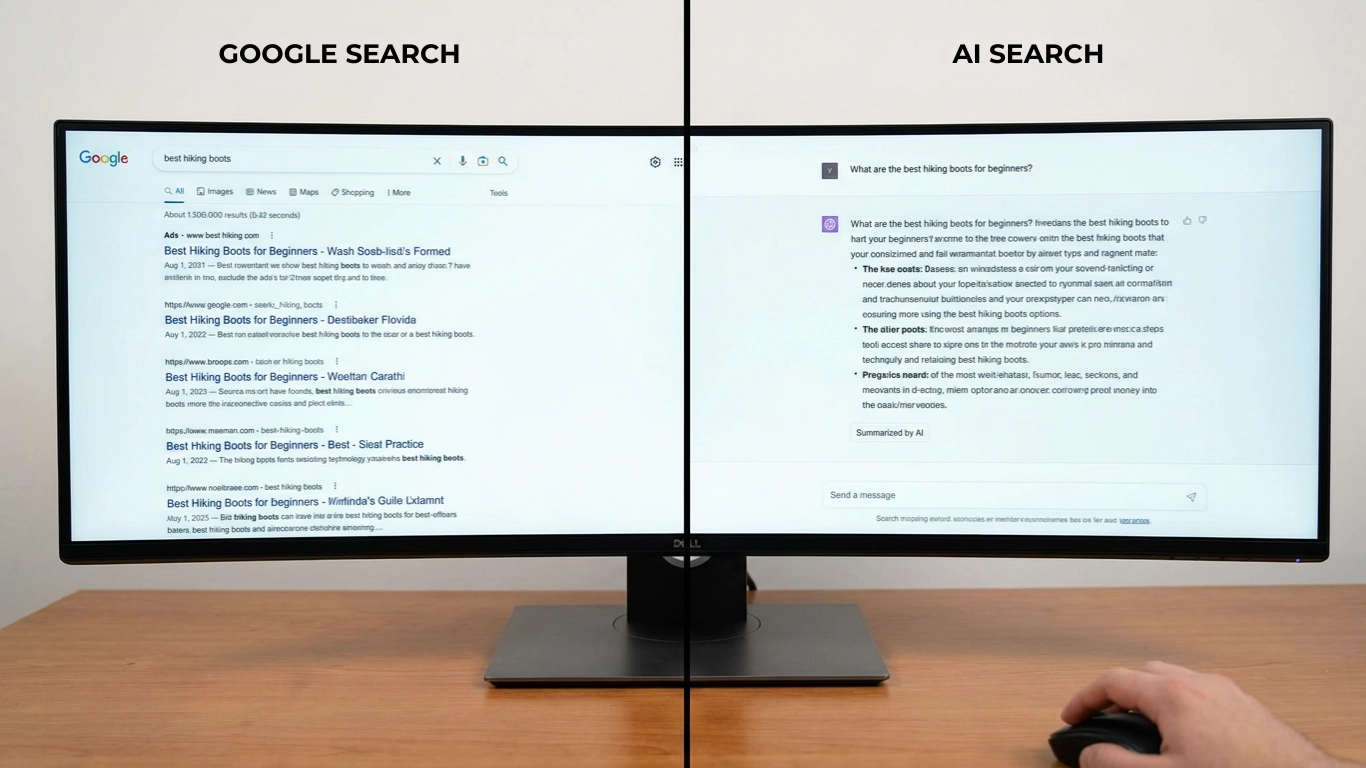
In the era of AEO and GEO, Google is not the only game in town. Yes, Google is hugely important, but don’t forget there are other places people ask questions. To truly embrace answer optimization, consider all the platforms and formats through which your customers might seek answers, and ensure you have a presence there.
Here are a few to consider:
- Bing and Other Search Engines: Bing has integrated AI (through its partnership with OpenAI) into its search interface. It can generate answers much like ChatGPT for users. If you’re already doing AEO/GEO for Google, most of those efforts will naturally help on Bing, but it’s worth submitting your site to Bing Webmaster Tools and making sure you’re indexed there as well. Bing also uses schema markup and might even be more eager than Google to use it at times.
- Voice Assistants: Many voice assistants (Google Assistant, Alexa, Siri) pull answers from the web. Google Assistant often pulls from featured snippets (AEO again), so that’s covered if you optimize for snippets. Alexa and Siri use a variety of sources (Alexa taps into Bing for some queries, for instance). To optimize for voice, try to ensure your content reads in a conversational tone and directly answers “who/what/when/how” questions clearly (since voice queries are usually phrased as natural questions). For example, include a sentence that literally answers the question in a way that could be read aloud and make perfect sense.
- Google’s Knowledge Graph & Entities: Sometimes the answer isn’t a snippet but a knowledge panel (that box on the side of Google results with quick facts). While you can’t directly control that, having things like a Wikipedia page for your business or adding structured data for things like business details can feed Google’s knowledge graph. If you become recognized in the Knowledge Graph, your information is more likely to be used in answers (this aligns with the entity optimization from tip #3).
- Third-Party Q&A Sites: Consider contributing to platforms like Quora or Reddit if relevant. If people are asking questions about your industry on those sites, writing a high-quality answer (and mentioning your brand or linking to your detailed blog post if allowed) can indirectly boost your AEO/GEO. Sometimes, Google will even feature a Reddit or Quora answer in its snippets if it’s especially good. Also, AI models that have been trained on large datasets might have “seen” those community answers. By having your expertise out in those public forums, you increase the chances an AI has learned from your insights. Just be transparent about who you are and avoid being too promotional in those spaces.
- Video Content for Answers: Don’t overlook YouTube and video search. Google often features YouTube videos for “how to” queries with a suggested clip answering the question (e.g., a clip from a tutorial video). If your business can produce short answer-oriented videos (with clear titles like “How to Do X in 5 Minutes”), you could capture that segment of answer optimization too. Some AIs are also getting better at pulling info from video transcripts.
By optimizing beyond just your website – thinking in terms of an omni-channel answer strategy – you increase your odds of being the answer no matter where the question is asked. The goal is to make your expertise widely available and easily digestible on any platform.
Keep in mind, you don’t have to tackle everything at once. See where your audience is most active and start there. For instance, if you know your customers frequently use Siri, focus on making sure your site is mobile-friendly and loaded with concise Q&A content (since Apple Maps/Siri often pulls from certain partners). If you’re big in B2B and suspect a lot of people use ChatGPT for research, then GEO efforts and maybe having some content on LinkedIn (which is often consumed by Bing and AI) could be beneficial.
The big picture: be everywhere your customers are asking questions, with the best answers you can provide.
Conclusion: Embracing the Future of Search (AEO + GEO)
The way people find information online is undergoing a significant shift. We’re moving from a world where users sift through links, to a world where users get answers directly – sometimes from a search result snippet, sometimes from an AI-generated response. In this new landscape, businesses that adapt will thrive by being the trusted answer at every turn.
The key takeaway is that AEO and GEO are not an “either/or” choice – they work hand-in-hand. AEO ensures you’re ready for today’s answer boxes; GEO ensures you’re ready for tomorrow’s AI-driven answer experiences. In practice, both boil down to a simple principle: provide clear, helpful, and trustworthy answers to the questions your audience is asking. Do that consistently, and you’ll build visibility and credibility on any platform – whether it’s Google, Alexa, ChatGPT, or something new.
It’s normal if all this feels a bit overwhelming at first. The good news is you don’t have to navigate it alone. Empowerment is at the heart of Ramonda Digital’s mission. We’re here to help demystify these concepts and put them into action for your business. If you’re excited about the potential of AEO and GEO but unsure where to start, or you want to ensure you’re covering all bases, reach out to Ramonda Digital. Our team is passionate about helping small and medium businesses implement AEO + GEO strategies that drive real results.